Headphones are among the objects we use for the most hours a day and choose the worst. We buy them by price and brand, try them for ten minutes in a shop or not at all, and then discover that they pinch, that the microphone on video calls is unlistenable, that the battery lasts half the claimed time or that after a year the ear cushion is flaking apart. None of these problems has anything to do with sound quality. They depend on the form factor, the materials, the microphone and on how well the product was designed for the use you will put it to. This guide starts there: from use, not from the spec sheet.
An honest premise first. The Headphones category on Dedalshop brings together very different objects: pocketable true-wireless earbuds, over-ear headphones with noise cancelling, office headsets with a boom microphone, open-ear headphones for runners. There is no best model in absolute terms. There is the right model for the three or four hours a day you will actually wear it, and the quickest way to get it wrong is to buy music headphones for meetings, or meeting headphones for the train.
1. First question: what will you do with them most of the time
Before looking at any product, it is worth writing down the three situations in which you will use the headphones most often and giving each a rough percentage. The result is almost always surprising. People who think they are buying headphones for music discover that seventy per cent of the time they will be on video calls; people who want them for running find they will mostly wear them at the office. Every use has one dominant criterion, and the criteria sometimes contradict each other.
For work calls the dominant criterion is the microphone, followed closely by comfort over long sessions. For travel and commuting it is noise cancelling, followed by battery life. For sport it is stability, sweat resistance and awareness of your surroundings. For listening at home what matters is absolute comfort and sound quality. For a shared home, where you need to hear the doorbell or the children, a transparency mode or an open form factor counts. Once the main use is clear, half the catalogue eliminates itself.
A criterion nobody states: how many hours in a row
The same headphones that are perfect for forty minutes can become unbearable by the third hour. Weight, headband pressure, the temperature inside the ear cup, the sense of occlusion with in-ear buds: all of these accumulate. Someone who works eight hours in headphones has very different needs from someone listening to a podcast on the underground, and should treat them as ergonomic requirements, not aesthetic ones.
2. Form factors: what really changes between in-ear, over-ear, on-ear and open-ear
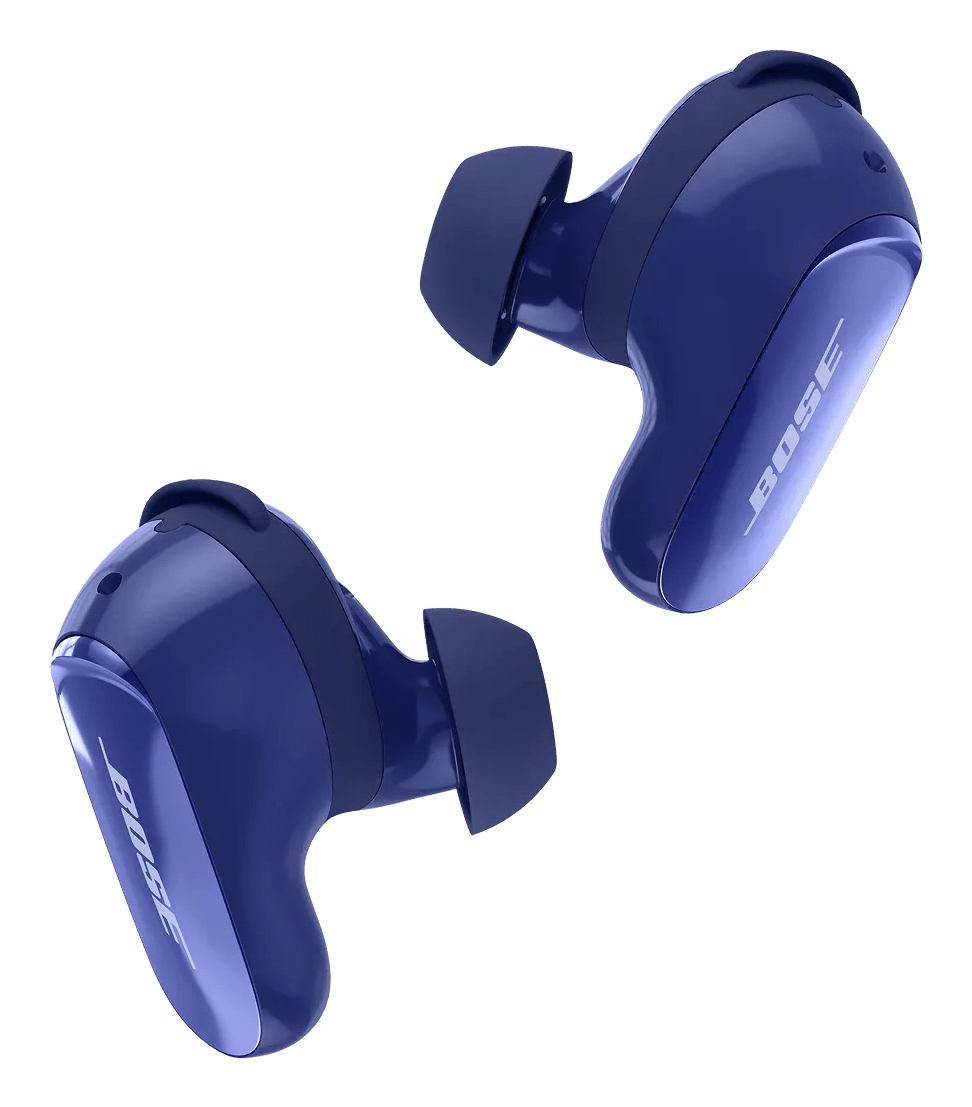
True-wireless in-ear earbuds are the most widespread format. They sit in the ear canal with a silicone tip that passively isolates you from noise, live in a case that recharges them and weigh a few grams. The advantages are obvious: pocketable, discreet, good at blocking out the environment. The limits are just as concrete: isolation depends on a tip of the right size, some people feel a sense of pressure, battery life per charge is limited to a few hours, and the tiny dimensions make the microphones weaker in wind.
Over-ear headphones surround the whole ear with a padded cup. They are the most comfortable for long sessions, the most isolating and the ones with the most effective active noise cancelling, because the closed cup gives the microphones a controlled environment. They weigh between two hundred and fifty and three hundred and fifty grams, get warm in summer and do not fit in a pocket. They are the right format for people who work many hours, travel often or listen attentively at home.
On-ear headphones rest on the ear without surrounding it. More compact than over-ears, but direct pressure on the ear tires you sooner and isolation is modest. They are a reasonable compromise for someone who wants a headband without the bulk, less so for anyone seeking comfort over long periods.
The open format: when you need to hear the world
Open-ear headphones, such as nearphones that hook onto the ear and leave the canal free, are a newer format that solves a precise problem: listening without cutting yourself off. Runners on the road, cyclists, people working in an office where they must hear colleagues, parents at home with small children. Sound reaches you by proximity or conduction, the environment stays audible and there is nothing inside the ear. The limits are just as clear: bass is lighter, in noisy places you hear little, and at high volume some of the sound is perceptible to those next to you. These are not headphones for the train; they are headphones for the street and the home.
3. Noise cancelling: how it works and when you really need it
Active noise cancelling, ANC, uses external microphones to capture ambient noise and generates an opposite wave that cancels it before it reaches the eardrum. It works superbly on constant low-frequency noise: the aircraft engine, the rumble of the train, air conditioning, the background hum of an open-plan office. It works far less well on sudden sounds and on voices, which are variable and high-frequency. Anyone expecting total silence in a crowded café will be disappointed; anyone wanting to cut the background roar of a three-hour flight will be very satisfied.
ANC quality varies enormously between products. In high-end over-ears the attenuation is deep and natural; in many cheap earbuds it is little more than an effect, sometimes accompanied by a faint background hiss. The practical rule: if ANC is the reason you are buying, it is not the item to save money on, and the over-ear format starts with an advantage.
Transparency, adaptive modes and pressure sensitivity
Transparency mode does the opposite: it uses the same microphones to let the environment through, so you can talk to someone or hear the station announcement without taking the headphones off. In good products it sounds natural, almost as if you were wearing nothing; in mediocre ones it sounds metallic. Adaptive ANC adjusts the intensity automatically according to the environment, handy for anyone who moves around a lot during the day. One detail that matters: some people feel a sense of pressure with ANC on, similar to an aircraft descending. It is not a product defect and it is subjective; if you feel it, most headphones let you reduce the intensity or switch ANC off while keeping passive isolation.
4. The microphone: the most underrated criterion
Anyone who has sat through a meeting with someone using cheap earbuds knows that the microphone is where most headphones fail. The reason is physical: a tiny microphone placed near the ear, far from the mouth, surrounded by noise and often wind, has to isolate the voice from everything else. Products designed for music treat the microphone as an accessory; products designed for calls treat it as the main component.
Office headsets with a boom microphone that reaches close to the mouth remain unbeatable for calls. The boom mic picks up the voice from a few centimetres away, background noise is cut, and professional models certified for video-conferencing platforms integrate physical controls to answer, mute and adjust volume. A boom headset is less elegant than an earbud, but anyone spending four hours a day on calls is repaid in clarity for themselves and for others. They come in wired USB versions, the most reliable and battery-free, and wireless versions with a base or dongle for moving around the room.
What to ask of an earbud for calls
If you do not want a boom, look for earbuds with several microphones per side and a stated call noise-reduction function, which is different from ANC. The number of microphones matters less than how they are used: the best systems combine external microphones with a sensor that detects voice vibration through the bone, and so distinguish your voice from the person walking past. Wired mono earpieces, typical of switchboard telephony, remain a sober and reliable option for people who phone a lot and want one ear free.
5. Codecs, connection and compatibility
Bluetooth transmits compressed audio, and the codec is the compression format. SBC is the universal one and is enough for podcasts and calls. AAC is preferred by Apple devices. aptX and its variants, LDAC and LC3 offer more bandwidth or less latency on compatible Android and Windows devices. The practical truth: the difference between codecs is heard less than it is read about, and only matters if the phone and the headphones support the same one. Before paying for a codec, check that your device uses it.
Far more important in daily life is multipoint, the ability to stay connected to two devices at once: the computer for the meeting and the phone for the call that comes in meanwhile. People who work use it ten times a day. Equally useful is device finding through the app and the ability to update the firmware, which in serious products improves ANC and the microphone months after purchase.
Latency: when it matters and when it does not
Latency is the delay between picture and sound. For music it is irrelevant, for video it is almost always compensated by the phone, for gaming and for anyone playing an instrument it becomes a serious problem. If your main use is gaming or audio production, wired headphones or a model with a stated low-latency mode are the obligatory choice.
6. Battery life, charging and the life of the battery
Claimed battery figures need careful reading. For earbuds the figure usually given is the life per single charge plus the total with the case: five hours and thirty in total, for example. With ANC on, high volume and frequent calls, the real figure drops by a third. Over-ears reach thirty, forty or more hours per charge, which means one charge a week for office use. Fast charging, which gives an hour of listening from ten minutes on the cable, is more useful than it seems for people who forget to charge.
A point no spec sheet tells you: earbud batteries are tiny and not replaceable. After two or three years of daily charging the battery life shrinks noticeably, and that is the real limit on the product's life. Over-ears have larger batteries and age more slowly; in some models the battery can be replaced by the service centre. Anyone who wants an object that lasts five years or more still has only one safe answer: the cable.
7. Materials, construction and the points that break
In over-ears the component that wears out first is the ear cushion. Cheap synthetic leather padding, after a year or two of sweat and heat, starts to flake into small scales. It is the most common and most predictable failure. Protein leather or real leather padding lasts longer; but the decisive criterion is another: are the cushions replaceable? In serious products yes, with official or compatible spares, and the object is like new again for a modest cost. In cheap products they are glued, and when they go you replace everything.
The headband is the second critical point. Those with a metal core resist twisting; those made entirely of plastic crack at the pivot, especially if the headphones are folded every day. The adjustment mechanism should slide with clean friction and no play. Folding hinges, where present, deserve suspicion: convenience in exchange for a weak point.
Earbuds: tips, case and sweat
With earbuds the parts that get lost and worn are the tips: you need several sizes and it is worth having spares. The case is more fragile than it looks: the hinge loosens, the charging contacts oxidise if left wet. The certification against sweat and splashes, indicated by IP followed by two digits, should be read realistically: IPX4 copes with the sweat of a run, not a rinse under the tap. And it applies to the earbuds, almost never to the case.
8. Use cases: four profiles, four different answers
Working from home with meetings all day. The microphone is everything. A boom headset, wired USB-C or wireless with a dongle, is the most reliable choice; anyone preferring discretion can choose over-ears with dedicated call microphones and multipoint. Comfort over eight hours comes before anything else: low weight, soft headband, breathable cushions.
Travellers and commuters. Effective ANC and long battery life. High-end noise-cancelling over-ears transform three hours on a train; earbuds with ANC are the compromise for anyone who wants to travel light and accepts less isolation. Transparency mode for announcements and fast charging are the details that make the difference.
Runners and cyclists. Stability and awareness of surroundings. Earbuds with wings or hooks and sweat certification, or the open-ear format that leaves the canal free and lets you hear traffic. Noise cancelling here is a risk, not an advantage.
Attentive listening at home. Comfort and sound quality, with no compromises for portability. Over-ears, even wired; a large cup and deep padding are worth more than any smart feature.
9. Care: ten minutes a month that double the lifespan
In-ear buds accumulate wax and dust on the driver mesh, and the first symptom is a more muffled sound on one side. They are cleaned with a soft dry brush and, for the removed tips, with a slightly damp cloth. Never liquids on the mesh. The case should be cleared of dust with air or a dry cotton bud on the contacts. Over-ears are cleaned with a barely damp microfibre cloth on the cushions and left to air-dry after use on hot days: trapped sweat is what shortens the life of synthetic leather.
For the battery, the rule is the same as for phones: avoid leaving them at zero for weeks or keeping them fully charged in a sunny drawer for months. For the cable, on models that have one, never wrap it tightly around the headphones: breakage near the connector is the second cause of premature death after the cushions. Updating the firmware when the app suggests it is free and often improves concrete things.
10. Quick comparisons: the choices that divide
Wired or wireless? Wired have no battery, no latency, no compression and last for years. Wireless is freedom of movement and convenience. Anyone working at a fixed desk needs wireless less than they think; anyone who moves around would never go back to the cable.
Earbuds or over-ears with ANC? For maximum isolation and comfort over long hours, over-ears. For portability and discretion, earbuds. People who do both often end up owning both, and it is not a waste.
Boom headset or earbuds for calls? If voice clarity is a professional requirement, the boom wins. If calls are a part of your day rather than its centre, earbuds with good microphones are enough.
New or refurbished? Refurbished over-ears, if the cushions are in good condition or replaceable, are an excellent deal. With earbuds more caution is advisable, because the battery is not replaceable and wear is invisible.
11. Seasonality: when to buy and what changes with the climate
In summer closed over-ears get warm, and anyone using them to work in the heat discovers the value of fabric cushions or an open format. In winter over-ears almost become an accessory, and woollen hats sit badly over earbuds, which are lost more easily with gloves on. On prices, new models are generally presented between spring and autumn, and the previous generation drops in price immediately afterwards: buying last year's model, often almost identical, is the most rational saving in the category. The weeks before the holidays are the most expensive for flagship products and the best for office headsets, which are less subject to fashion.
12. Quick questions
Does noise cancelling remove voices? Only partly. It cuts constant low noise very well, voices and sudden sounds much less. In an open-plan office it is a help, not a wall.
How long do true-wireless earbuds really last? Two or three years with daily use, limited by the non-replaceable battery. Over-ears and wired models last much longer.
Do I need an advanced codec? Only if your phone supports it and you listen to music attentively. For podcasts and calls the standard codec is enough.
Is multipoint really useful? For anyone using a computer and phone together, yes, every day. For anyone with a single device, no.
Can I use them in the rain? With IPX4 certification or higher, earbuds cope with light rain and sweat. The case generally does not.
The selection
Some real products from the category to start from, each for a different need:
- Bose QuietComfort Ultra 2nd Generation — high-end noise-cancelling over-ears, for travellers and long working hours
- Samsung Galaxy Buds4 White — true-wireless earbuds with ANC, the compact everyday choice
- Samsung Galaxy Buds4 Black — the same model in the more discreet finish
- JBL Vibe Flex True Wireless — open, lightweight fit for anyone who dislikes the in-ear feel
- JVC Nearphones HA-NP40T Open Ear — open-ear for running, cycling and a home with children
- JVC HA-NP50T True Wireless — the latest version of the same open family
- HP Poly Voyager 4320 UC Wireless — boom-mic headset for anyone living on video calls
- HP Poly Blackwire 3320 — wired USB headset, no battery and no surprises
- Microsoft Modern USB-C Headset — wired, certified for meetings, with physical controls
- Agfeo 1500 Wired Mono Earpiece — switchboard mono, for heavy phone users who want one ear free